
Labette County Criminal Court Records
A Labette County criminal court record is the court case file created after the prosecutor files a criminal matter. It is different from a booking entry or jail roster profile. The court file follows the prosecution through complaint or information, bond and appearance orders, arraignment, pretrial motions, hearings, trial activity, plea, verdict, judgment, sentence, probation, restitution, fines, costs, and later expungement activity when filed.
Felony cases and district-level criminal matters are handled in Kansas District Court. Labette County is in the 11th Judicial District with Cherokee and Crawford counties. The full-service Labette County Judicial Center in Parsons handles criminal matters as part of the District Court caseload, while the Oswego courthouse location primarily handles traffic, fish and game, and limited criminal matters. City misdemeanors and local traffic citations may be handled by municipal courts, including Parsons Municipal Court for offenses inside Parsons city limits.
Search Labette County Criminal Court Records
The primary online case route is Kansas Case Search, which the Kansas Judicial Branch identifies as the statewide public search portal for District Court records. A search can begin with a case number, party name, business name, citation, or other criteria available to the public role. For criminal records, the case number or defendant name is usually the strongest starting point.
- Confirm that the matter is a court case, not just an arrest or booking. Filed criminal cases are searched through District Court tools.
- Search by case number if known. If not, use defendant name and narrow by county, case type, or date when those filters are available.
- Open the result and review docket entries for complaint, information, appearance, bond, hearing, plea, disposition, and sentence events.
- Use courthouse terminal access or a written request when the online entry does not show a document or certified disposition.
- Use the Clerk of the District Court for certified copies, older files, and questions about sealed, expunged, or restricted criminal case material.
State criminal-history checks are separate. The Kansas criminal history record search is the public KBI route for criminal-history record checks, while the KBI registered offender website is for sex, violent, and drug offender registry data. Those systems do not replace the Labette County court case file.
Labette County Criminal Case Flow
Criminal court records make the most sense when read as a sequence. The arrest or investigation can come first, but the court case starts when charges are filed. The County Attorney prosecutes violations of Kansas criminal laws and is the office that decides whether arrest allegations become filed charges, diversion offers, plea terms, or trial issues. The court record then tracks what the judge orders and how the case ends.
Case flow: Charges Filed › Arraignment › Pretrial and Motions › Plea or Trial › Disposition › Sentencing
| Stage | What Happens |
|---|---|
| Charges Filed | A complaint or information begins the court case and lists the alleged offense, statute, and count information where public. |
| Arraignment | The defendant is advised of charges and enters a plea such as guilty, not guilty, or no contest. |
| Pretrial / Motions | The docket may show appearances, continuances, bond orders, evidence motions, discovery issues, and hearing notices. |
| Plea or Trial | The case may resolve by plea, trial verdict, dismissal, diversion-related outcome, or another court order. |
| Disposition | The result of each charge or the case is entered, such as guilty, dismissed, acquitted, or otherwise closed. |
| Sentencing | The court records jail, prison, probation, fines, costs, restitution, treatment terms, and other ordered conditions when public. |
What Labette County Criminal Court Records Show
A criminal case file can contain far more than a charge label. District Court criminal records may include probable-cause material if public, bond or appearance bonds, arraignment entries, motions, rulings, trial minutes, verdict forms, judgment, sentence, probation terms, restitution, fines, costs, and payment activity. A public online display may show only part of that file, so the docket should be used to identify which documents need to be requested from the clerk.
| Field | What It Shows |
|---|---|
| Case Number | The District Court case identifier used for searches, requests, payments, and certified copies. |
| Defendant | The person charged in the case, with redactions possible for protected personal information. |
| Charges | Offense label, statute, count number, severity or classification where visible, and later amendments. |
| Bond | Cash, surety, appearance bond, or other release conditions when entered in the case. |
| Docket Events | Appearances, motions, hearings, continuances, notices, pleas, orders, warrants, and sentencing events. |
| Plea | The defendant's answer to the charge, such as guilty, not guilty, or no contest. |
| Disposition | The final result of a charge or case, including conviction, dismissal, acquittal, diversion result, or other closure. |
| Sentence | Jail, prison, probation, fines, costs, restitution, treatment conditions, or other terms ordered by the court. |
Labette County Criminal Record Sources
The first source screenshot comes from the Kansas Department of Corrections, which is relevant after a criminal court case results in a state prison sentence or other KDOC status.

A KDOC result can help locate a sentenced person, but the plea, judgment, sentence order, and disposition still come from the court record.
The second source screenshot comes from the KASPER offender search disclaimer, which explains the state offender-search context and update limits.
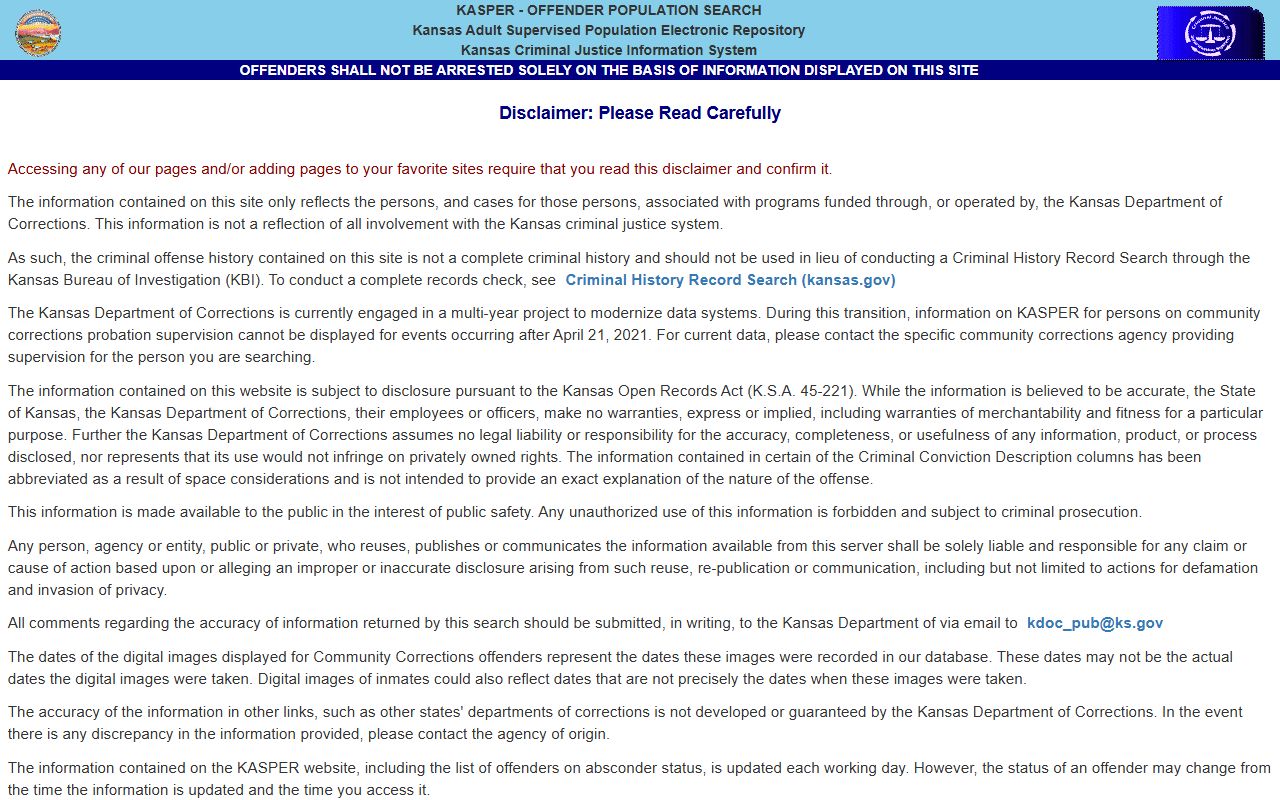
When the research path moves from a Labette County criminal case to a KDOC record, keep the two files separate and verify the court disposition with the clerk if legal proof is needed.
The third source screenshot comes from the KDOC locating a resident FAQ, which directs users toward KASPER for state custody location and status.
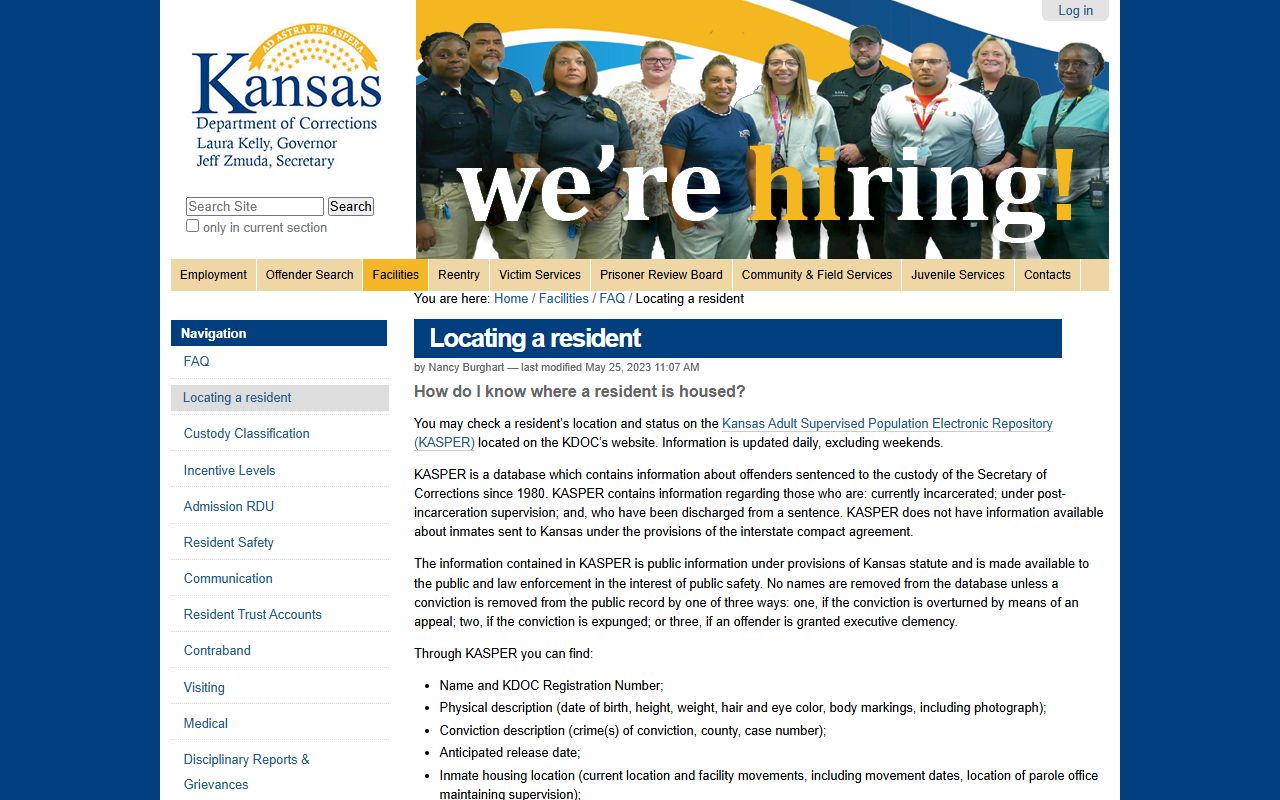
This distinction prevents a custody lookup from being mistaken for the official court history. A person can have a court record even when there is no current KDOC custody record.
The fourth source screenshot comes from the Kansas Bureau of Investigation, which is relevant because state criminal-history and offender tools are separate from Labette County criminal court case files.
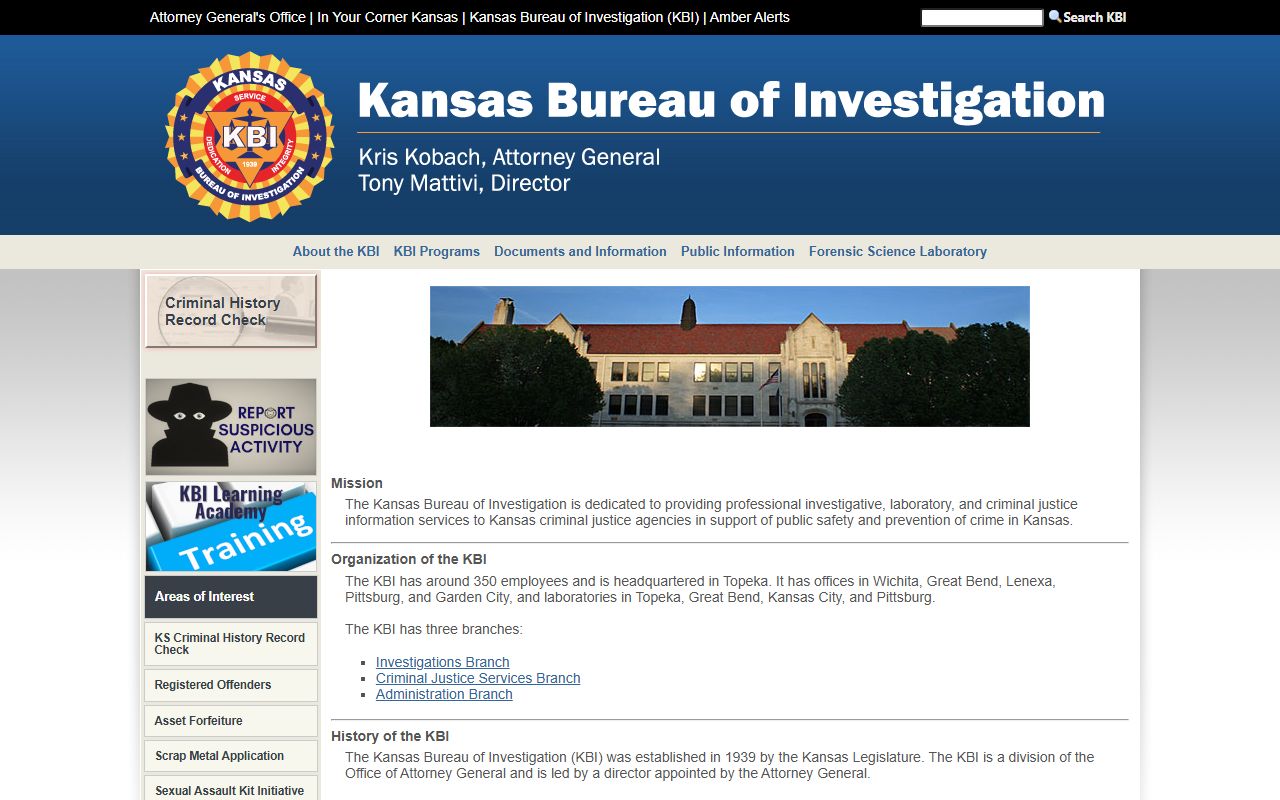
KBI resources are helpful for criminal-history and registry questions, but the local case sequence still has to be read through District Court filings and docket events.
The fifth source screenshot comes from the Kansas criminal history record search, the official public route for Kansas criminal-history checks.
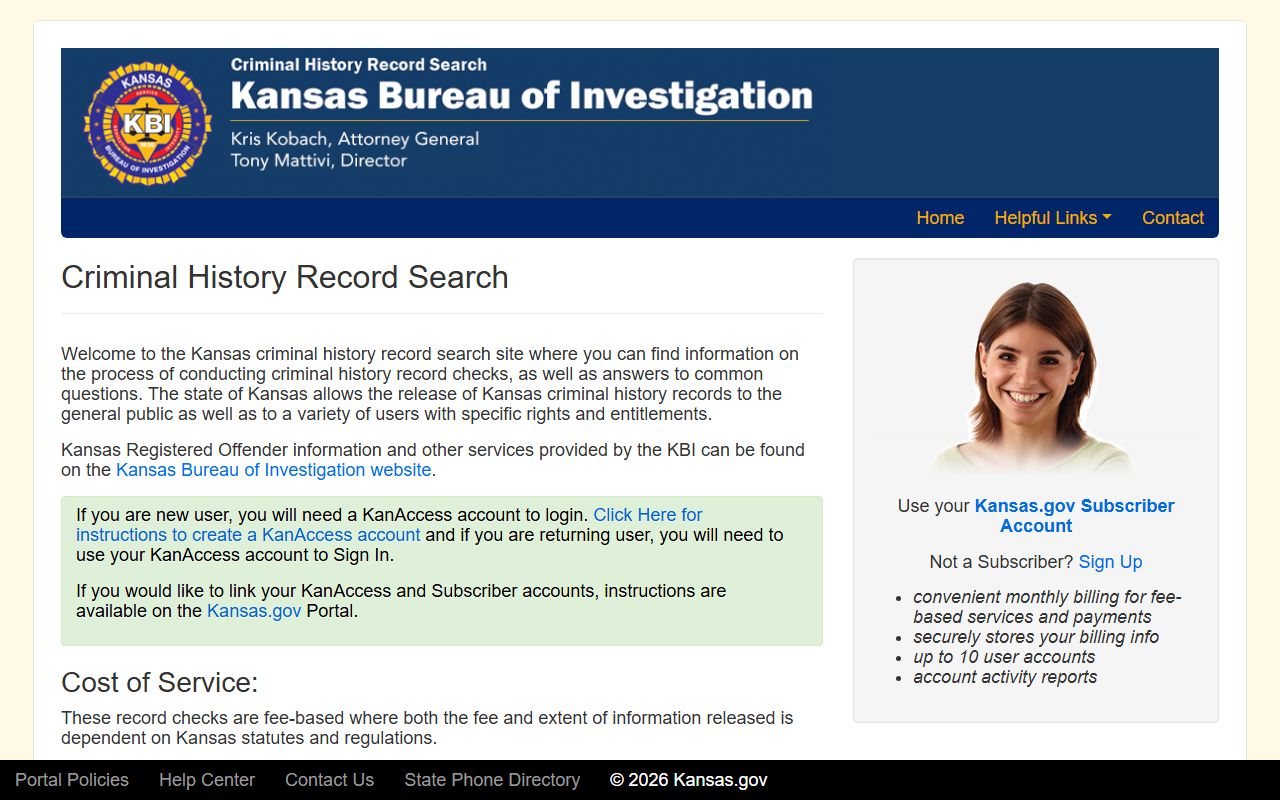
Use KBI systems for statewide criminal-history or registered-offender searches. Use Kansas Case Search, courthouse terminals, and clerk requests for the filed Labette County criminal court record.
Charges vs Convictions
A charge is an accusation filed by the prosecutor. A conviction is a result after a guilty plea, no-contest plea accepted by the court, or guilty verdict. A Labette County criminal court record may show charges that were amended, reduced, dismissed, or ended in acquittal. For closer detail on the charge itself, including arrest-to-charge fields, use the Labette County arrest records and court charges page.
| Issue | Charge | Conviction |
|---|---|---|
| Meaning | An allegation that a crime was committed. | A court result after plea or verdict. |
| Where It Appears | Complaint, information, docket, jail charge fields, and court events. | Disposition, judgment, sentencing, and criminal-history records when reportable. |
| Can Change | May be amended, reduced, dismissed, or dropped. | Can be appealed, corrected, or later affected by expungement if eligible. |
| Use Caution | A charge alone is not proof of guilt. | A conviction should still be verified against the court record and current status. |
Read Dispositions and Sentences
Disposition means the result of a charge or case. In a Labette County criminal court record, a disposition can show guilty, not guilty, dismissed, acquitted, diverted, or otherwise resolved, depending on the case. The same case can have more than one count, and each count can have a different result. Always read the disposition at the count level when the docket or case file separates counts.
Sentence entries explain what the court ordered after conviction. The record can show jail or prison time, probation, fines, costs, restitution, treatment terms, or other conditions. Bond is different from sentence. Bond is tied to release and appearance before final resolution, while sentence follows conviction or a plea-based result.
- Plea
- The defendant's answer to a charge.
- Diversion
- An agreement that may avoid conviction if court and prosecutor conditions are completed.
- Restitution
- Money ordered to compensate a victim.
- Probation
- A supervised sentence in the community instead of, or after, custody.
Sealed vs Expunged Records
Sealed and expunged are not the same. A sealed record is closed from ordinary public access by statute or court order. An expunged Kansas record is handled under the expungement statute, which can limit public access to eligible convictions, arrest records, and diversion agreements. Expunged records may still be available for specified law-enforcement, licensing, or statutory purposes.
| Issue | Sealed | Expunged |
|---|---|---|
| Public Visibility | Hidden from public search or public file review. | Limited from public access after an expungement order. |
| Authority | Statute or court order. | Kansas expungement process under K.S.A. 21-6614 when eligible. |
| Common Examples | Juvenile, adoption, protected personal information, sealed filings. | Eligible convictions, arrest records, and diversion agreements. |
| Practical Step | Ask the court whether access requires a court order. | File in the court where the conviction, arrest, or diversion occurred. |
Public Access to Labette County Criminal Records
Kansas access rules allow public inspection of many criminal court case records, but the access path depends on the record. K.S.A. 45-216 states Kansas public policy favoring open records unless the law provides otherwise. K.S.A. 45-220 sets access and copy procedures for public records. Court-specific electronic access is governed by Kansas Supreme Court Rule 22 and Rule 106B.
Key point: Kansas court guidance says written court-record requests must be acted on by the end of the third business day after receipt.
County Attorney and Counsel
Labette County uses a County Attorney title, not District Attorney. The County Attorney prosecutes violations of Kansas criminal laws, juvenile offender matters, child protection proceedings, mental commitment matters, and appeals involving the office. The research identifies Mandy Johnson as County Attorney, with a Parsons office at 201 S. Central Avenue, Parsons, Kansas 67357, phone 620-421-6370, and an Oswego office at 417 Merchant Street, Oswego, Kansas 67356, phone 620-795-2221.
Defendants who cannot afford counsel request appointed counsel through the court. The research did not locate a current official Labette-specific public defender office page with public contact details, so criminal court records copy should not list unverified defender contacts. Attorney names may appear in docket entries when counsel has entered an appearance and the information is public.
Restricted Labette County Criminal Records
Public criminal court records do not include every criminal justice record. Juvenile offender records and child-in-need-of-care records have access limits, and K.S.A. 38-2209 makes child-in-need-of-care records confidential except as provided by law. Sealed cases, expunged records, protected addresses, Social Security numbers, account numbers, full dates of birth, medical details, and minor identities can be withheld or redacted.
Some active investigation material may never be part of the public court file. Jail roster data may also change after court appearances. The Sheriff's Office profile disclaimer says charges and bail amounts may change and may not be current, and persons posting bail should contact jail staff at 620-795-2565 for correct bail amount, charges, and case numbers. The court record remains the better source for filed charge status and final disposition.